Here is a dirty secret of the AI industry: most machine learning models never make it into production. A data scientist builds a brilliant model on a laptop, and then it dies — because nobody figured out how to deploy it reliably, monitor it, retrain it, and keep it running at scale. The engineers who solve that problem are called MLOps engineers, and they are among the most in-demand specialists in tech right now.
This guide explains what MLOps actually is, what these engineers do all day, and how to become one.
What Is MLOps?
MLOps — machine learning operations — is the discipline of taking ML models from experiments to reliable production systems. Think of it as DevOps, but for the unique messiness of machine learning: models that degrade over time, data pipelines that break silently, training jobs that cost thousands of dollars, and regulatory demands for explainability.
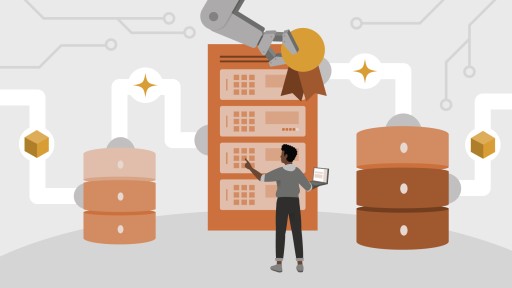
The core insight: a model is only a small fraction of a real ML system. Around it you need data ingestion, feature stores, training pipelines, model registries, deployment infrastructure, monitoring, alerting, and rollback procedures. MLOps engineers build and run all of that.
What MLOps Engineers Do Day to Day
The role sits at the intersection of software engineering, DevOps, and data science. Typical responsibilities include:
- Building training pipelines — automated workflows that take raw data, validate it, train models, evaluate them, and register the winners. Tools: Kubeflow, SageMaker Pipelines, Vertex AI.
- Deploying models — serving predictions via APIs with proper versioning, canary releases, and rollback. Tools: Seldon, BentoML, Triton, or cloud endpoints.
- Monitoring in production — tracking not just uptime but model behavior: data drift, prediction drift, and accuracy decay. A model that worked in January can quietly go stale by June.
- Managing infrastructure — Kubernetes clusters, GPU scheduling, cost optimization. Training large models is expensive; MLOps engineers keep the bills sane.
- Enforcing reproducibility — experiment tracking (MLflow, Weights & Biases) so any model can be rebuilt exactly.
- Collaborating — translating between data scientists who speak statistics and platform teams who speak infrastructure.
Why Companies Are Desperate for Them
- The AI investment wave. Every enterprise is racing to deploy AI features; the bottleneck is no longer model quality but production reliability.
- Regulatory pressure. Finance, healthcare, and hiring applications face growing demands for model auditing, fairness checks, and documentation — all MLOps territory.
- Cost reality. Unmanaged ML infrastructure burns money. Companies learned that a good MLOps engineer pays for themselves in cloud savings alone.
- Scarcity. The role is new enough that few people have the full skill stack, which keeps salaries high and competition for talent fierce.
Skills You Need
MLOps is a “T-shaped” role — broad engineering fundamentals plus ML-specific depth:
- Software engineering: strong Python, Git, testing, and API design. This is non-negotiable — MLOps is an engineering role first.
- DevOps fundamentals: Docker, Kubernetes, CI/CD pipelines, infrastructure as code (Terraform).
- Cloud platforms: deep familiarity with at least one of AWS, GCP, or Azure’s ML stacks.
- ML literacy: you do not need a PhD, but you must understand training, evaluation metrics, and why models fail — enough to have real conversations with data scientists.
- Data engineering basics: SQL, batch and streaming pipelines, feature stores.
The most common entry paths: DevOps/SRE engineers who learn ML, data engineers who go deeper on deployment, or ML engineers who specialize in production systems.
How to Break In
- Build the foundation: get genuinely good at Python, Linux, Docker, and one cloud platform before touching ML-specific tools.
- Learn the ML lifecycle: take a course or specialization focused on deploying models, not just training them.
- Build a portfolio project: the gold standard is an end-to-end project — train a model, wrap it in an API, containerize it, deploy to the cloud with CI/CD, add monitoring, and document the whole thing. This single project demonstrates every skill employers screen for.
- Contribute and certify: cloud ML-engineering certifications (AWS ML Specialty, GCP Professional ML Engineer) help get past resume filters.
- Start adjacent: many MLOps engineers start as DevOps engineers on ML teams or as data engineers, then specialize.
Pay and Career Outlook
MLOps engineers are well compensated even by tech standards, typically earning at the high end of software engineering pay bands, with senior specialists and those at AI-forward companies earning substantially more. Demand shows no sign of cooling: as more companies move from AI pilots to production deployments, the shortage of engineers who can actually run these systems reliably keeps growing. Contract and consulting rates are equally strong, giving experienced practitioners the option of lucrative independent work alongside traditional employment. The role also offers unusual leverage: because you multiply the productivity of entire data science teams, strong MLOps engineers become linchpins — hard to replace and quick to promote into staff and principal roles, or into ML platform leadership.
Key Takeaways
- MLOps is the engineering discipline that gets ML models into reliable, monitored production — where most AI projects actually fail.
- The role blends software engineering, DevOps, and ML literacy; it is an engineering role first.
- Demand is driven by enterprise AI adoption, regulation, cloud costs, and genuine talent scarcity.
- An end-to-end portfolio project (train → deploy → monitor) is the strongest way to break in.
Conclusion
As AI moves from demos to infrastructure, the heroes are increasingly the engineers who make it run reliably at 3 a.m. MLOps sits exactly there — technically deep, business-critical, and scarce. If you enjoy building systems that other smart people depend on, and you want a front-row seat to the AI transformation with compensation to match, MLOps is one of the strongest bets in tech today.
Keep Reading
Explore more guides on Jobars 2: