Mechanical engineering is the oldest and broadest engineering discipline — and paradoxically, one of the most future-proof. While software gets the headlines, the physical world still needs people who understand thermodynamics, materials, fluid dynamics, and machine design. Today, that classical foundation is colliding with robotics, additive manufacturing, and AI-driven design, creating a new generation of mechanical engineering careers in advanced manufacturing. For students and working engineers alike, this is a field being reinvented in real time.
What Advanced Manufacturing Means for Mechanical Engineers
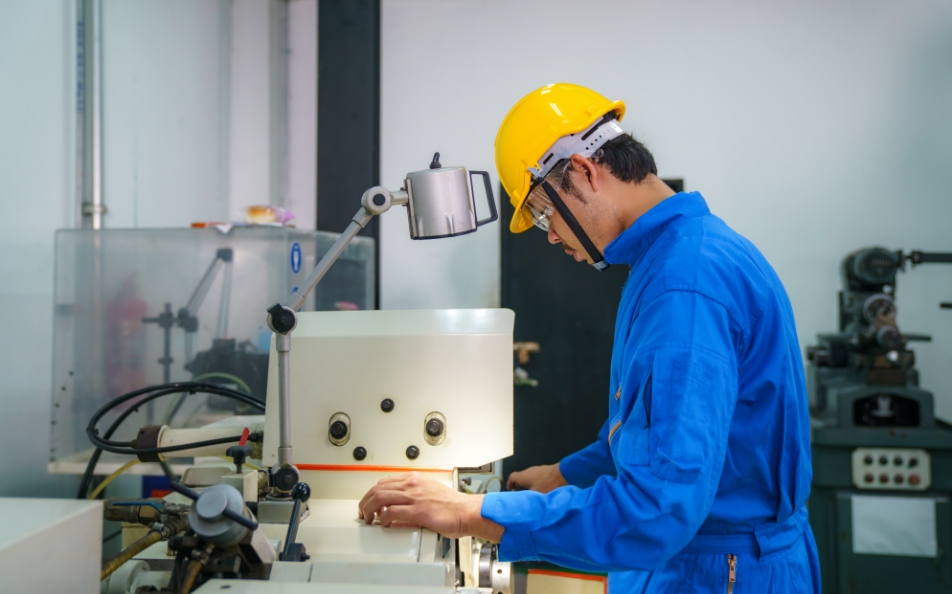
Advanced manufacturing refers to production that integrates cutting-edge technology: industrial robotics, 3D printing (additive manufacturing), digital twins, IoT-connected equipment, and AI-assisted design and quality control. For mechanical engineers, this shifts the job from purely designing parts to designing entire intelligent production systems.
A mechanical engineer in a modern plant might spend Monday optimizing a robotic welding cell, Tuesday running finite element analysis on a 3D-printed bracket, Wednesday reviewing sensor data from a predictive maintenance dashboard, and Thursday collaborating with software engineers on a digital twin of the assembly line. The core engineering judgment remains, but the toolkit has expanded dramatically.
Key Career Tracks Within Advanced Manufacturing
Robotics and Automation Engineering
Designing and integrating robotic workcells — selecting robots, designing end-of-arm tooling, programming motion paths, and ensuring safety compliance. This track blends mechanical design with controls knowledge and is among the fastest-growing ME specialties.
Additive Manufacturing Engineering
Specializing in 3D printing for production: design for additive manufacturing (DfAM), material selection across metals and polymers, print parameter optimization, and post-processing. Aerospace, medical device, and automotive companies are hiring aggressively here.
Manufacturing and Process Engineering
Owning how things get made at scale: process design, lean optimization, tooling and fixture design, and production ramp-up. The engineers who can take a prototype to high-volume production reliably are perpetually in demand.
Product Design and R&D
Designing the products themselves — from consumer devices to industrial machinery — using CAD, simulation, and rapid prototyping. Generative design tools powered by AI are changing this workflow, rewarding engineers who learn to guide them.
Energy Systems and Sustainability
Designing HVAC systems, renewable energy hardware, battery thermal management, and industrial energy efficiency. As manufacturing decarbonizes, this track connects mechanical fundamentals to the energy transition.
Education and Credentials That Matter
A bachelor’s degree in mechanical engineering (or closely related field) remains the standard entry ticket, and ABET accreditation (or your country’s equivalent) matters for licensure and many employers. Beyond the degree:
- Professional licensure (PE): Valuable in industries like HVAC, building systems, and consulting; less critical in product companies but still respected.
- Graduate study: A master’s in robotics, manufacturing, or materials science can accelerate entry into specialized tracks.
- Software-adjacent skills: Python for data analysis, PLC basics, and CAD/FEA proficiency (SolidWorks, ANSYS, or equivalents) increasingly separate candidates.
- Six Sigma / lean certifications: Green Belt or Black Belt credentials carry real weight in manufacturing environments.
Industries Hiring Mechanical Engineers Right Now
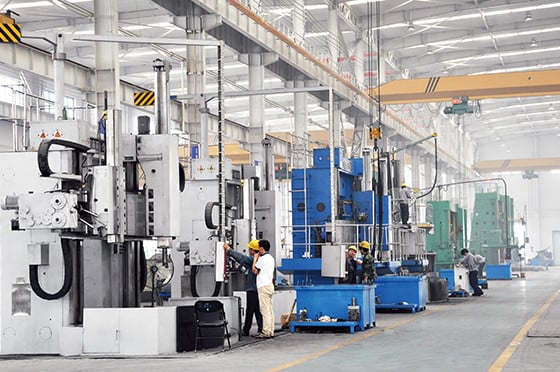
Demand clusters in several sectors. Electric vehicles and batteries need thermal, structural, and manufacturing engineers at scale. Aerospace and defense offer deep technical work with long project horizons. Semiconductor equipment — the machines that make chips — is precision mechanical engineering at its finest and pays accordingly. Medical devices combine meaningful work with rigorous design discipline. And industrial automation suppliers hire MEs to build the robots and systems other factories buy.
Geographically, manufacturing is reshoring in the US, expanding in India and Southeast Asia, and remaining strong across Germany, Japan, and South Korea. Engineers willing to locate near industrial clusters find the most options.
How to Stand Out as a Candidate
- Build things. Personal projects — a 3D-printed mechanism, a small robot, a restored machine — demonstrate more than grades alone.
- Learn the digital thread. CAD plus simulation plus basic data skills is the modern ME trifecta.
- Get plant experience early. Internships or co-ops in real manufacturing environments teach practical judgment no classroom can.
- Communicate clearly. Engineers who can explain trade-offs to non-engineers become leads and managers.
A Day in the Life
What does the work actually feel like? A robotics engineer might start the morning reviewing overnight cycle-time data from a workcell, spend midday commissioning a new gripper with a technician, and end the day in a design review debating tolerance stack-ups. A manufacturing engineer could be on the plant floor at dawn troubleshooting a stamping press, then in the afternoon building a cost model for a process change. The common thread is variety: few ME roles are desk-only, and most blend analysis, hands-on problem-solving, and collaboration across disciplines. If you dislike monotony, this is a feature, not a bug.
Key Takeaways
- Advanced manufacturing is reinventing mechanical engineering around robotics, additive manufacturing, and digital twins.
- Hot tracks include robotics/automation, additive manufacturing, process engineering, product R&D, and energy systems.
- An accredited ME degree plus CAD/simulation skills and plant experience form the core profile.
- EVs, aerospace, semiconductor equipment, and medical devices are strong hiring sectors.
- Hands-on projects and manufacturing internships are the fastest credibility builders.
Conclusion
Reports of mechanical engineering’s decline have been greatly exaggerated — the discipline is not shrinking, it is evolving. The engineers thriving today are those who pair classical fundamentals with new tools: the thermodynamics expert who also programs robots, the machine designer who thinks in digital twins. If you build that hybrid profile, advanced manufacturing offers a career with genuine depth, tangible impact, and staying power that few fields can match. The physical world still needs builders. Learn to build it intelligently.
Keep Reading
Explore more guides on Jobars 2: