Every app you love and every website you abandoned in frustration has the same explanation: design. In a digital economy where products live or die on user experience, companies have learned that great design is not decoration — it is revenue. That realization is why skilled UX and UI designers now command salaries that rival software engineers, and why the field keeps growing even as other tech roles fluctuate.

Here is an honest look at why the premiums exist, what the work really involves, and how to earn them.
UX vs. UI: What the Titles Actually Mean
People use these terms interchangeably, but they describe different crafts:
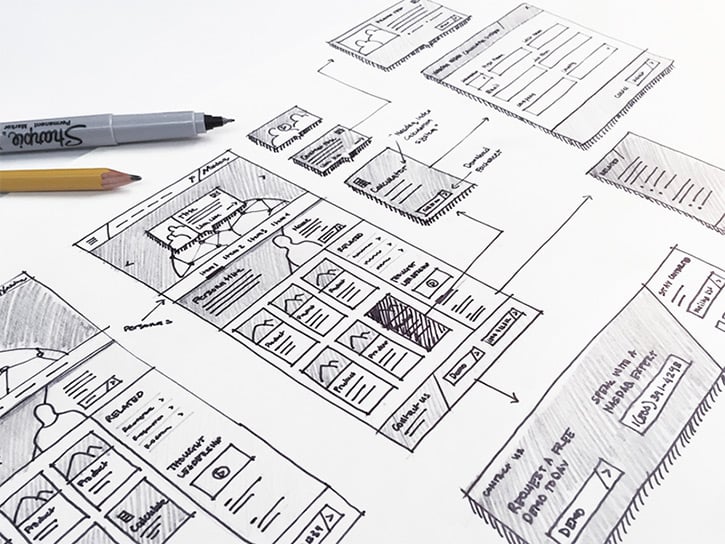
- UX (user experience) design is about how a product works: user research, information architecture, wireframes, user flows, usability testing. UX designers answer “are we building the right thing, and can people use it?”
- UI (user interface) design is about how a product looks and feels: visual hierarchy, typography, color, spacing, interaction states, and design systems. UI designers answer “does this feel effortless and beautiful?”
Many roles blend both (“product designer” is the common blended title), but understanding the distinction helps you position yourself. Research-heavy UX specialists and visually exceptional UI designers both earn premiums — for different reasons.
Why Companies Pay Premium Salaries
The premium is not charity; it is arithmetic:
- Design moves business metrics. Better onboarding flows raise activation rates; clearer checkout pages cut cart abandonment; thoughtful dashboards reduce support tickets. Companies can literally measure a good designer’s impact in revenue.
- Competition shifted to experience. When every company offers similar features, the product that feels better wins. Design became the differentiator.
- Scarcity of senior talent. Junior designers are plentiful; designers who can lead research, influence product strategy, and ship at scale are not. The premium concentrates at mid and senior levels.
- Cross-functional leverage. One great designer improves the output of entire engineering teams by preventing wasted builds — executives notice.
- AI raised the bar, not lowered it. Generative tools handle routine mockups, which pushed value toward the things AI cannot do: user empathy, strategic judgment, and complex systems thinking.
What the Work Looks Like Day to Day
A typical product design week mixes:
- Research: user interviews, usability tests, survey analysis, analytics reviews.
- Design: wireframes to high-fidelity mockups in Figma (the industry standard tool).
- Systems work: building and maintaining component libraries and design systems.
- Collaboration: critiques with other designers, handoffs to engineers, debates with product managers about scope.
- Iteration: testing, learning what failed, and redesigning — the unglamorous loop where quality comes from.
It is equal parts psychology, visual craft, and diplomacy. Designers who only want to “make pretty screens” wash out; those who embrace research and constraints thrive.
Skills That Command the Premium
- Portfolio over pedigree. Hiring managers skim portfolios in minutes. Three deep, well-documented case studies (problem → research → iterations → outcome, ideally with metrics) beat ten shallow dribbble shots.
- Figma fluency — components, auto-layout, prototyping, and design systems are table stakes.
- User research methods — interviewing, usability testing, and synthesizing findings separate UX designers from decorators.
- Systems thinking — designing patterns that scale across a product, not just one beautiful screen.
- Communication and storytelling — the best designers sell their decisions to skeptical stakeholders with evidence.
- Basic front-end literacy — HTML/CSS understanding (and some JavaScript) makes handoffs dramatically smoother.
Career Paths and Pay
Progression typically runs: junior designer → product designer → senior → staff/lead → design manager or principal IC. Specializations include UX research, interaction design, design systems, and conversational/Voice UI.
Pay reflects the premium: even junior product designers at tech companies earn strong starting salaries, mid-level designers at established companies do very well, and senior designers at top tech firms — especially in high-cost metros — earn compensation packages that compete with engineering. Freelance and contract designers with strong reputations can exceed salaried pay, trading stability for rate flexibility. Geography still matters, but remote work has spread top-tier pay far beyond the traditional hubs.
How to Break In (Without a Design Degree)
UX is one of tech’s most accessible pivots — many top designers came from psychology, journalism, architecture, or customer support:
- Learn the fundamentals: a structured course or bootcamp for Figma, design principles, and research methods. Avoid programs that only teach tools.
- Redesign real things: pick a frustrating app flow and redesign it with documented reasoning. Unsolicited redesigns, done rigorously, make excellent portfolio pieces.
- Do free/cheap real work: nonprofits and early startups will let you run actual research and ship real designs — infinitely more valuable than fictional briefs.
- Write case studies: document your process, trade-offs, and what you would do differently. Hiring managers read these carefully.
- Network in design communities: critique groups and local meetups surface the junior roles that never get posted.
Key Takeaways
- Companies pay design premiums because good UX measurably drives revenue, retention, and differentiation.
- UX (how it works) and UI (how it looks) are distinct crafts; “product designer” usually blends both.
- The premium concentrates at mid/senior levels — junior supply is plentiful, senior talent is scarce.
- A portfolio of deep, metric-backed case studies matters more than degrees or certificates.
Conclusion
Design went from “make it pretty” to a board-level concern in barely a decade, and compensation followed. For people who combine visual taste with curiosity about human behavior — and the resilience to defend their work with evidence — UX/UI design offers creative work, strong pay, and a genuinely meritocratic entry path. The bar is high, but it is a bar you can reach from wherever you are standing right now.
Keep Reading
Explore more guides on Jobars 2: