Every company sits on mountains of data — sales figures, customer behavior, operational metrics — and most of it is useless until someone turns it into a clear answer. That is the business intelligence analyst’s job: transforming raw numbers into dashboards, reports, and insights that executives actually use to make decisions. It is one of the most accessible data careers, it exists in virtually every industry, and it rewards curiosity as much as technical skill.
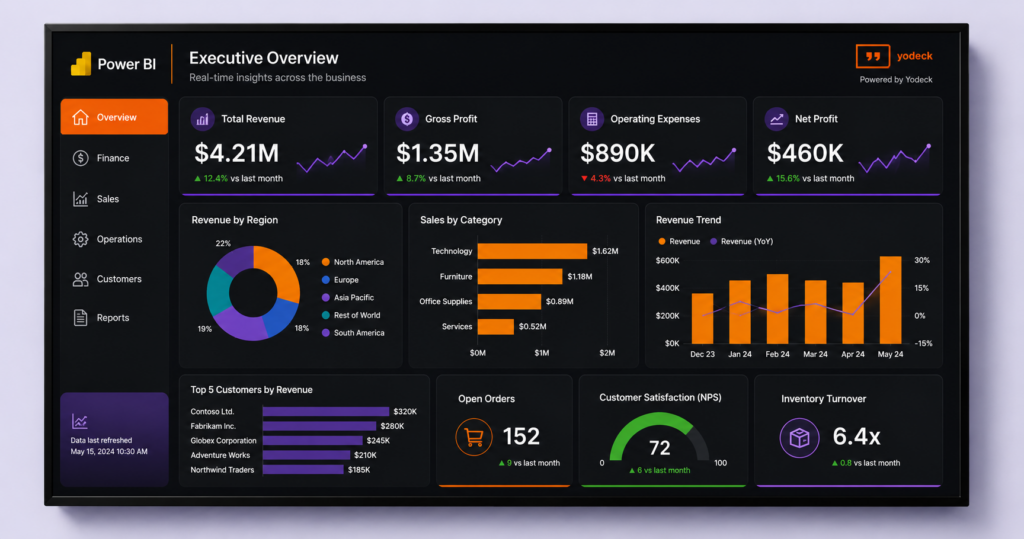
This guide covers what BI analysts do day to day, the tools you need, how the role differs from data science, and how to land your first position.
What a BI analyst actually does
The core loop is simple: understand a business question, find the data, build the answer. In practice that means:
- Meeting with stakeholders — a sales director, an operations manager — to pin down what they really need to know (which is often different from what they first ask for)
- Pulling data with SQL from warehouses and databases, cleaning it, and joining sources together
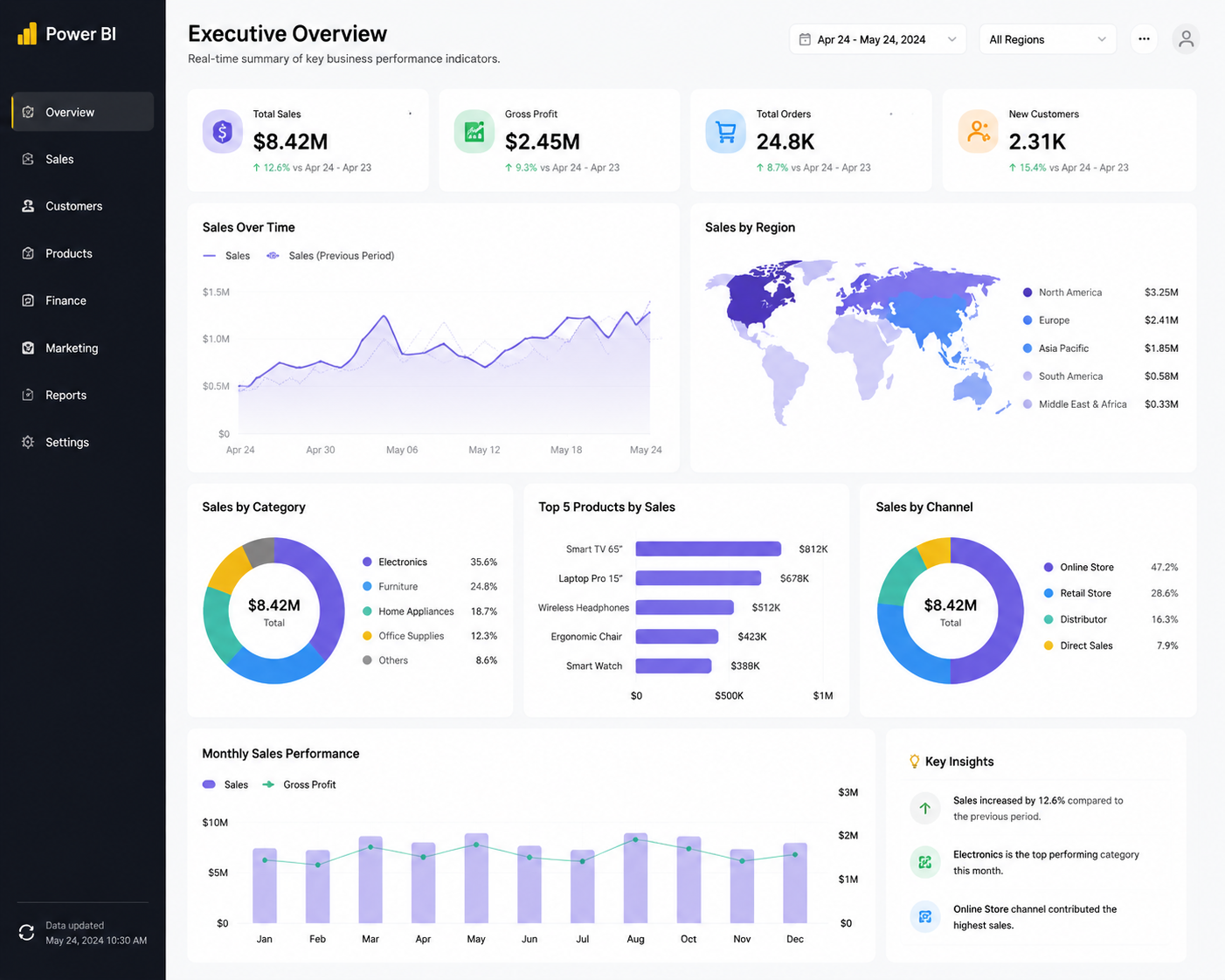
- Building dashboards and reports in tools like Power BI, Tableau, or Looker that update automatically
- Digging into the numbers to explain why something happened, not just what happened
- Presenting findings in plain language to people who will never write a line of SQL
The best BI analysts are translators. They speak enough “business” to understand the real question and enough “data” to answer it rigorously — then they deliver the answer in a form a busy executive can absorb in sixty seconds.
BI analyst vs. data scientist: the real difference
The titles get confused constantly. A useful simplification:
- BI analysts work primarily with structured business data and established tools, answering known questions and monitoring performance. The emphasis is on descriptive and diagnostic analytics: what happened, and why.
- Data scientists more often build predictive models and machine learning systems, work with messier data, and need deeper statistics and programming. The emphasis is on predictive analytics: what will happen.
Neither is “better” — they are different crafts. BI tends to be more stakeholder-facing and faster to enter; data science tends to be more technical and research-oriented. Many data scientists started as BI analysts, and the boundary between the roles blurs more every year.
The toolkit you actually need
SQL — non-negotiable
If you learn one thing, learn SQL well: joins, aggregations, window functions, CTEs. Nearly every BI interview tests it, and it is the daily workhorse of the role. Free practice databases and exercises can take you from zero to employable.
A BI visualization platform
Power BI and Tableau dominate job postings; Looker is strong in tech companies. Pick one, build several portfolio dashboards with real public datasets, and learn its data-modeling layer — not just drag-and-drop charts. Employers hire for the modeling, not the pretty visuals.
Excel and data modeling fundamentals
Excel refuses to die in business, and rightly so — advanced Excel (pivot tables, Power Query) remains genuinely useful. Underneath the tools, understand dimensional modeling basics: facts, dimensions, star schemas. This is what makes dashboards fast and trustworthy.
Python (helpful, not always required)
Python with pandas is increasingly listed as a plus for automation and heavier analysis. It is rarely the primary requirement for BI roles, but it widens your options and your pay band.
Business domain sense
The underrated skill. An analyst who understands retail margins, SaaS churn, or hospital throughput asks better questions and builds more useful dashboards than a pure technician. Whatever industry you target, learn its key metrics.
How to break in
- Build a portfolio, not just a resume. Two or three polished dashboards on public datasets (with a short write-up of the business question and your findings) outperform certificates in interviews.
- Learn in the right order: SQL first, then one BI tool deeply, then data modeling concepts, then Python basics.
- Target analyst-adjacent roles too: Reporting analyst, data analyst, and operations analyst postings often describe BI work under different names.
- Certifications help at the margin: Vendor certifications (Microsoft’s Power BI certs, Tableau’s) signal tool competence, but pair them with portfolio proof.
- Practice the stakeholder conversation: Interviews often include a case where you must clarify a vague business request. Practice asking sharp questions before jumping to solutions.
Career progression and where it leads
Typical paths run from BI analyst to senior analyst, then analytics manager or BI developer/architect for the technically inclined. Others move into product analytics, data science, or analytics engineering. Because every industry needs BI, you also gain unusual freedom to switch sectors — retail today, healthcare tomorrow — without starting over.
Key takeaways
- BI analysts turn business questions into data-backed answers via SQL, dashboards, and clear communication.
- BI emphasizes descriptive/diagnostic analytics with established tools; data science leans predictive and technical.
- SQL plus deep skill in one BI platform (Power BI, Tableau, or Looker) is the core employable toolkit.
- A portfolio of real dashboards beats certificates when applying.
- The role exists in every industry, making it one of the most transferable data careers.
Conclusion
Business intelligence analysis is the rare tech-adjacent career where communication matters as much as code, and where a motivated learner can become job-ready in months through focused practice with SQL and one visualization tool. If you enjoy the detective work of figuring out why the numbers moved — and explaining it so clearly that decisions follow — this field will reward you with variety, stability, and a front-row seat to how businesses actually run. Build the portfolio, learn to ask the second question behind the first, and the roles will follow.
Keep Reading
Explore more guides on Jobars 2: