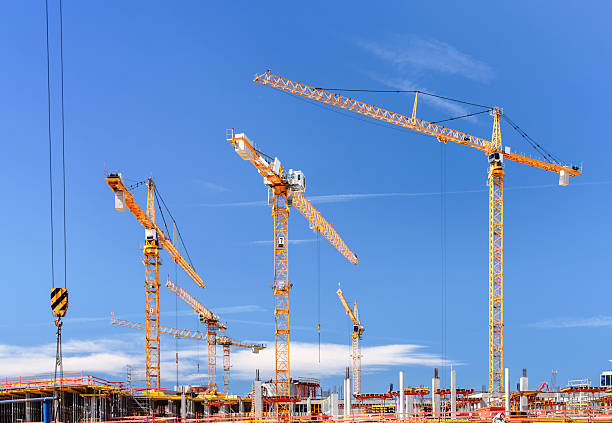
Cranes on skylines tell an economic story, and right now the UK and Germany are telling an interesting one. Both countries face the same paradox: ambitious infrastructure and housing agendas alongside an aging construction workforce and persistent skills shortages. The result is strong, sustained demand for the people who actually run building projects — construction project managers. For experienced builders and career-changers alike, these two markets deserve a serious look.
This guide covers what construction project managers do, why the UK and Germany specifically offer opportunity, what qualifications each market expects, and how to position yourself.
What construction project managers actually do
A construction PM owns delivery of a building project from pre-construction through handover. The role blends technical knowledge, commercial acumen, and people leadership:
- Planning and programming: Developing the master schedule, sequencing trades, and planning logistics for constrained urban sites.
- Budget control: Managing costs against the budget, forecasting final spend, and controlling variations — the commercial heart of the role.
- Procurement and contracts: Tendering subcontract packages, negotiating, and administering contracts (JCT and NEC forms dominate in the UK; VOB is standard in Germany).
- Team leadership: Coordinating site managers, engineers, subcontractors, and client representatives — often dozens of organizations on one project.
- Health, safety, and quality: Non-negotiable responsibilities with serious legal weight in both countries.
- Client management: Reporting progress, managing expectations, and protecting relationships when — inevitably — problems arise.
Why the UK market is hiring
- Infrastructure pipeline: Major programs in transport, energy, and water continue to generate demand for experienced PMs, particularly those comfortable with NEC contracts.
- Housing pressure: Chronic housing shortages keep residential and mixed-use development active, especially around major cities.
- Retrofit and net-zero: Upgrading existing buildings for energy efficiency is a growing workload that needs managers who understand both construction and sustainability requirements.
- Skills shortage: An aging workforce and reduced EU labor mobility since Brexit have tightened supply — experienced managers are genuinely scarce, which supports both salaries and negotiating power.
Why Germany is hiring
- Infrastructure renewal: Germany faces a well-documented investment backlog in transport, bridges, schools, and digital infrastructure — a multi-year pipeline of work.
- Energy transition (Energiewende): Grid expansion, renewables, and building efficiency programs create construction demand with a green dimension.
- Housing demand: Major cities face acute housing shortages, driving residential construction.
- Demographic squeeze: Germany’s skilled-trades workforce is aging fast, and the shortage of qualified site leadership is widely reported — good news for qualified candidates, including international ones.
- EU mobility: For EU citizens, working in Germany involves minimal bureaucracy; for non-EU professionals, the EU Blue Card and skilled-worker routes are relevant for experienced managers.
Qualifications each market expects
United Kingdom
- Chartered status (MCIOB via the Chartered Institute of Building, or MAPM) is highly valued and often effectively required for senior roles.
- SMSTS (Site Management Safety Training Scheme) certification is standard for site leadership.
- Degree in construction management, civil engineering, or quantity surveying is the typical foundation, though experienced trade-background managers progress well.
- NEC contract familiarity is a distinct advantage for infrastructure work.
Germany
- German language proficiency is usually essential — site communication, contracts, and regulation all run in German. This is the single biggest barrier for international candidates.
- Relevant degree (Bauingenieurwesen or similar) plus practical experience; the German system respects formal qualifications.
- Familiarity with VOB contracts, HOAI fee structures, and German building regulations.
- Safety qualifications (SiGeKo coordination knowledge) relevant to project scale.
How to enter or advance
- From the trades or site supervision: The classic route — site managers and engineers stepping up. Formalize it with chartership (UK) or further qualifications, and deliberately build commercial skills (contracts, cost control), which separate PMs from supervisors.
- From adjacent project roles: Planners, quantity surveyors, and design managers transition naturally; the project context is already familiar.
- International candidates: For the UK, skilled worker visa routes exist for experienced construction professionals; shortages in the occupation support applications. For Germany, prioritize language learning alongside credential recognition — the opportunity is real but the language bar is too.
- Stand out: Digital construction skills (BIM coordination, 4D planning), sustainability literacy, and a record of delivering complex projects on program are the differentiators employers pay premiums for.
What separates good construction PMs from great ones
Technical competence gets you the role; a handful of rarer qualities determine how far you go:
- Commercial instincts: The best PMs think like business owners — they spot margin risks early, negotiate variations firmly but fairly, and understand that a project delivered late at a loss helps no one. Quantity surveying literacy, even without the formal title, is a major asset.
- Calm under pressure: Projects go wrong in predictable ways — ground conditions, late materials, subcontractor failures. Great PMs have contingency plans ready and communicate problems to clients early, with solutions attached, rather than hoping issues resolve themselves.
- Digital fluency: BIM coordination, 4D planning (linking schedule to model), and digital snagging tools are moving from nice-to-have to expected. PMs comfortable with these tools run tighter projects and are visibly more employable.
- Sustainability literacy: Embodied carbon targets, BREEAM/DGNB certifications, and energy standards increasingly shape project decisions. Understanding them is becoming a differentiator, particularly for public-sector and corporate clients.
- People leadership: Construction remains a relationship business. The PMs who retain the best subcontractors and site teams — through fairness, clarity, and respect — consistently deliver better outcomes than those who manage by pressure alone.
Key takeaways
- Construction PMs own schedule, budget, contracts, safety, and client relationships on building projects.
- The UK offers infrastructure, housing, and retrofit demand amplified by post-Brexit skills shortages.
- Germany offers infrastructure renewal and Energiewende-driven work, with EU mobility advantages — but German language is usually essential.
- UK employers value CIOB chartership and NEC familiarity; Germany values formal qualifications and VOB/HOAI knowledge.
- Commercial skills and digital construction competence are the key differentiators for advancement.
Conclusion
Construction project management in the UK and Germany is that rare combination: essential work, structural demand, and too few qualified people. The barriers are real — chartership processes, language requirements, the sheer responsibility of the role — but they are also what protect the career’s value. If you are already in construction, the path upward runs through commercial skill and formal credentials. If you are looking in from outside, know that these markets reward competence over connections, and that a well-qualified project manager will find work on either side of the Channel for the foreseeable future.
Keep Reading
Explore more guides on Jobars 2: